
Has your car been blowing warm air lately? Taking longer than usual to cool down? Or did the aircon just give up entirely — no warning, no cold air, nothing?
You’re not alone. It’s one of the most common calls we get at Route 1 Mechanical, especially heading into summer. And while Karratha’s heat is hard on every vehicle, it’s particularly brutal on air conditioning systems — pushing them harder, for longer, day after day.
The good news: most aircon problems have a clear cause and a clear fix. Here are the seven most likely culprits, what each one costs to repair, and how to know when you can DIY and when to leave it to a professional.
1. Low Refrigerant — The Most Common Culprit in WA Heat
If your air conditioner is blowing air that’s cool but not cold, low refrigerant (also called AC gas or Freon) is the most likely explanation. Car air conditioning systems are sealed units, but they do lose small amounts of refrigerant over time — and in the Pilbara heat, your system works harder and longer than it would almost anywhere else in the country.
A standard car AC regas in Karratha typically costs between $115 and $165 for the refrigerant top-up alone, though most reputable workshops will run a full system check alongside it, which may bring the total to around $200–$260. If a regas is needed every couple of years, that’s a very manageable cost compared to sweltering through a Karratha summer.
Worth knowing: Most manufacturers recommend regassing your AC system every one to two years. If yours hasn’t been touched in three years or more, there’s a good chance low refrigerant is at least part of the problem.
2. Refrigerant Leaks — When a Regas Isn’t Enough
If your system loses refrigerant quickly after a regas, you almost certainly leak. Common leak points include:
- O-ring seals on the refrigerant lines (very common and relatively cheap to fix — typically $120–$200 for minor seal replacements)
- Hoses and fittings that have cracked or perished due to heat and age
- Evaporator coil leaks, which are harder to access and more expensive to repair
- Condenser punctures from stone chips or debris on unsealed roads
A professional leak detection service using UV dye or electronic detectors typically costs $150–$300. It’s money well spent — skipping this step and just regassing the system repeatedly is a false economy.
3. Compressor Failure — The Big One
The compressor is the heart of your car’s air conditioning system. It pressurises the refrigerant and circulates it through the system, and without it working properly, cold air simply isn’t possible.
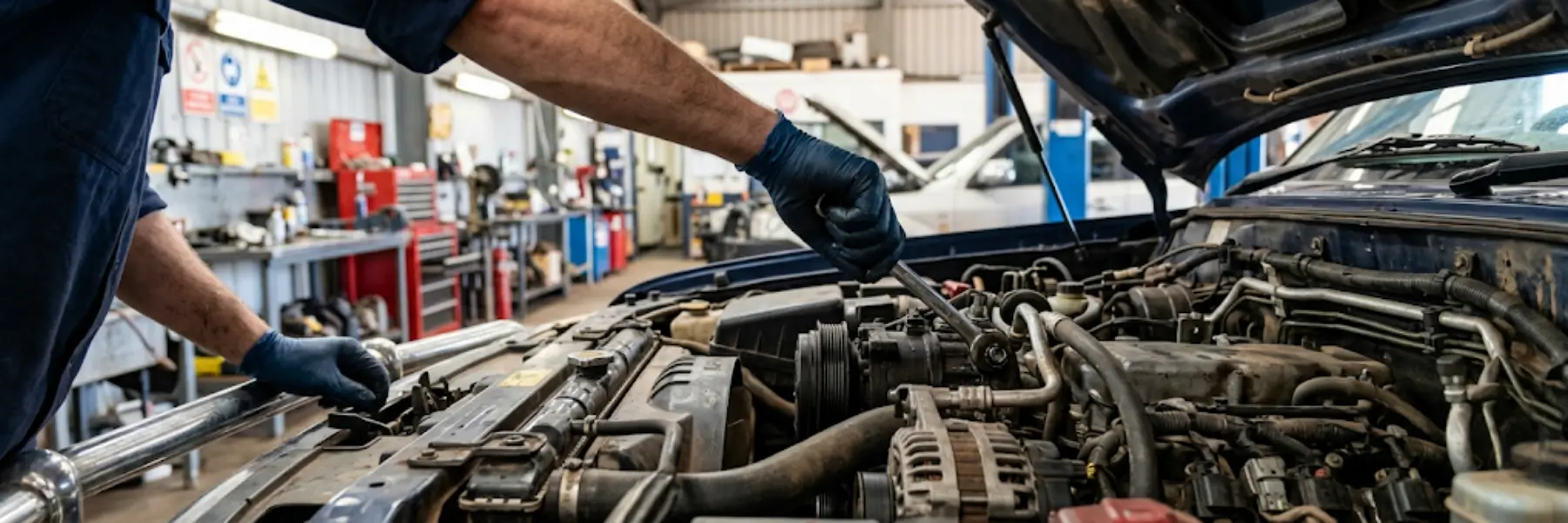
Compressor failure is more likely on vehicles that have done over 150,000 km, or on those where the AC hasn’t been used regularly — a compressor that sits idle for months can suffer from oil starvation when it’s finally switched back on.
Signs your compressor may be failing include:
- A loud clicking, grinding, or squealing noise when you switch the AC on
- Warm air blowing even though the system appears to be working
- Visible oil staining around the compressor body
- The AC clutch not engaging at all
On average, an AC compressor replacement costs between $800 and $1,200 or more, depending on the make and model of the vehicle. For 4WDs, utes, and prestige vehicles — all very common in the Karratha area — costs can sit at the higher end of that range. It’s one of the more significant repairs on a car’s air conditioning system, but there’s generally no way around it if the compressor has failed.
4. Condenser Blockages — A Pilbara-Specific Problem
The condenser sits at the front of your vehicle (usually just behind the grille) and works like a radiator for your AC system. It releases heat from the refrigerant before it cycles back through the evaporator.
In the Pilbara, the condenser faces a unique enemy: fine red dust. Karratha’s roads — particularly routes heading out towards Dampier, Wickham, and the surrounding industrial estates — throw up a constant stream of debris that can pack into the condenser’s fins over time, reducing airflow and causing your AC to work far harder than it should.
Condenser cleaning is often straightforward, but a damaged or punctured condenser will need replacement. Condenser replacement costs typically range between $140 and $800, depending on the vehicle type. Regular servicing that includes an AC health check is the best way to catch condenser blockages early, before they lead to more expensive downstream problems.
5. Cabin Air Filter — Small Part, Big Impact
This is one of the most overlooked items in a car’s AC system. The cabin filter cleans the air before it enters the interior of the vehicle, and in a dusty environment like Karratha, it can become completely clogged well before the manufacturer’s recommended replacement interval.
A blocked cabin filter doesn’t just reduce airflow — it forces the blower motor to work harder, and over time can contribute to musty smells and reduced cooling efficiency. Cabin filter replacement is one of the cheapest fixes on this list, typically costing between $30 and $80 depending on the vehicle.
Check your vehicle’s service manual for the recommended replacement interval, but in Karratha’s dusty conditions, it makes sense to inspect it at every service.
6. Electrical Faults and Blown Fuses
Your car’s air conditioning system relies on several electrical components to function properly — including the blower motor, the compressor clutch, the pressure sensors, and the control module itself. If any of these develop a fault, the result can be anything from no airflow to a completely non-functional system.
Common electrical issues include:
- Blown AC fuses — usually the first thing to check; cheap and quick to fix
- Faulty pressure sensors — these cut power to the compressor if refrigerant pressure drops too low; the sensor itself may have failed even if the pressure is fine
- Wiring and relay faults — more time-consuming to diagnose but generally straightforward to repair once identified
- Blower motor failure — the motor that pushes air through your vents; replacement typically costs $150–$400, including labour
Auto electrical diagnostics are an important part of any proper AC inspection. If your aircon suddenly stopped working entirely rather than gradually losing performance, an electrical fault is often the more likely explanation.
For complex electrical issues, it’s worth choosing a workshop with dedicated auto electrical capabilities — not just general mechanical experience.
7. Blocked or Faulty Expansion Valve (TX Valve)
The expansion valve controls the flow of refrigerant into the evaporator, regulating how much gets through at any one time. If it becomes blocked — often by moisture or debris in the system — or if it fails mechanically, cooling performance will suffer noticeably.
A faulty TX valve can cause the evaporator to freeze up, which then blocks airflow entirely and leaves you with warm air blowing from the vents. It can also cause the opposite: insufficient refrigerant reaching the evaporator, resulting in mild rather than cold air.
TX valve replacement is typically one of the more affordable AC repairs, with parts usually costing between $15 and $180, though labour will add to this depending on the vehicle layout.
When Should You DIY, and When Should You Call a Mechanic in Karratha?
There are a handful of things you can check yourself before booking a service:
- Check the cabin filter — accessible through the glovebox on most vehicles, and easy to inspect visually
- Check the AC fuse — your owner’s manual will show you its location; a blown fuse is a simple replacement
- Look under the bonnet for obvious signs of damage around the condenser (at the front of the engine bay), or any visible oil residue near AC components
However, anything beyond these basic checks really does need a qualified mechanic. Handling refrigerant without the correct equipment is illegal in Australia under the Australian Refrigerants Council (ARC) licensing system. Beyond the legal issue, an incorrect diagnosis can result in spending money on a regas when the real problem is a failing compressor — and that’s an expensive mistake.
If your aircon has been getting gradually worse rather than failing suddenly, a full AC service including leak detection, refrigerant top-up, and system pressure test is a sensible place to start. The team at Route 1 Mechanical can run through the whole system and give you a clear picture of what’s going on — with no upselling, just honest advice.
Book an AC check with Route 1 Mechanical →
Don’t Ignore a Warm Aircon in Karratha

A struggling AC system that’s left unattended will typically get worse, not better. Low refrigerant puts more stress on the compressor. A blocked condenser pushes heat back into the system. Small leaks become larger ones. What might have been a $150 fix in October can easily become a $1,000+ repair by the time the wet season hits.
Karratha’s conditions are genuinely harder on vehicles than most other parts of Australia — the heat, the dust, the long distances between towns, and the demands of mining-related use all add up. Getting your vehicle’s air conditioning checked as part of a regular service makes sense here in a way it simply doesn’t in the southern states.
Our team understands exactly what local conditions demand. Whether you’re running a single-family car, a fleet of utes, or a European vehicle that’s seen better days, we’ll get your aircon sorted quickly and properly.
Explore our full range of vehicle services, including our cooling and engine health services, or get in touch to book a same-week appointment.
Frequently Asked Questions
How much does it cost to regas a car aircon in Karratha?
A standard regas typically costs between $115 and $260, depending on the vehicle and whether any additional repairs are required. It is best to have a full system inspection at the same time to rule out leaks.
How often should I service my car’s air conditioning in WA?
In Western Australia, and especially in the Pilbara’s heat and dust, every one to two years is a good guideline. Vehicles doing high kilometres or working in dusty conditions may benefit from more frequent checks.
Can I drive my car if the aircon is not working?
Yes, but it is not advisable in Karratha’s heat, particularly for passengers, pets, or young children. A failed AC also affects the demister, which can impair visibility in humid conditions.
Price disclaimer: the prices in this article are rough estimates only and are subject to change after we inspect your vehicle. For an accurate quote, call Route 1 Mechanical on 08 5106 7668.