
Something has just lit up on your dashboard. Or there’s a noise that wasn’t there yesterday. Or your temperature gauge is climbing in a way that doesn’t feel right. If you’re in Karratha, that moment matters more than it does almost anywhere else in Australia. The nearest town might be 150 km away. The road between you and help is unsealed, remote, and unforgiving in 45-degree heat.
This guide is for that exact moment. Here’s what each warning means, what to do immediately, and when to call a mechanic in Karratha versus when to stop the car and reach for your phone.
Warning Lights: A Practical Decision Guide for Karratha Drivers

Not all warning lights are equal. Some mean pull over right now. Others mean book in this week. Knowing the difference could save your engine, or your life.
Stop the Car Immediately
These lights indicate active, severe risk. Do not drive another kilometre:
- Oil pressure warning (red oil can symbol): Oil pressure has dropped critically. Continuing to drive will seize your engine within minutes. Pull over, switch off, and call for a tow.
- Engine temperature warning (red thermometer / H): Your engine is overheating. In Karratha’s summer heat, this escalates faster than in cooler climates. Stop immediately, do not open the radiator cap, and wait for the engine to cool before assessing.
- Brake system warning (red BRAKE or exclamation mark): If this illuminates while driving, your braking system has a fault. Do not assume it’s just the handbrake. Slow down carefully, pull over safely, and get a proper brake inspection before moving the vehicle again.
- Battery warning during driving (red battery symbol): If this appears while the engine is running, your alternator may have failed. You could lose power steering, headlights, and eventually the engine itself. Get off the road.
Get to a Mechanic Within 24-48 Hours
These are serious but not immediately catastrophic, provided no other symptoms are present:
- Check engine light (amber engine symbol): Can mean anything from a loose fuel cap to a sensor fault. If there’s no loss of power, no smoke, and no unusual noise, you can drive carefully to a workshop for a diagnostic scan. Do not ignore it for weeks.
- TPMS / tyre pressure warning: One or more tyres are underinflated or have lost pressure rapidly. Check visually for a flat before driving further. On Karratha’s corrugated outback roads, a slow puncture can become a blowout within kilometres.
- Battery / charge warning (amber): Your charging system is weakening. The vehicle may start fine now, but a flat battery at a remote site is a serious inconvenience. Book in promptly.
Monitor but Not Urgent
- Service due reminder: Book within the week. Don’t ignore it beyond that, especially for high-mileage Karratha drivers who often clock 30,000+ km annually.
- Traction control or stability warning: May indicate road conditions or a sensor issue. Monitor and book a check if it persists.
Why Karratha’s Environment Makes Every Fault More Serious
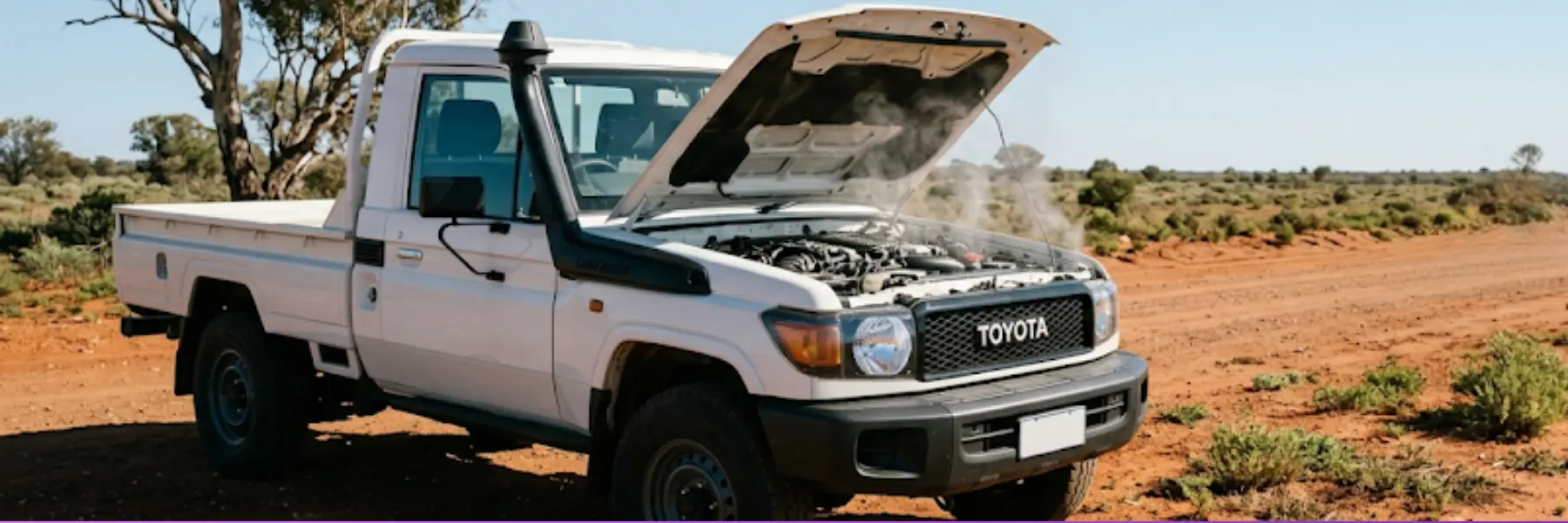
This isn’t a blanket statement. It’s geography. Karratha drivers regularly travel routes where a breakdown is not a minor inconvenience. It’s a genuine safety risk.
Consider the Karratha-to-Tom Price road (approximately 205 km), the Karratha-to-Onslow stretch, or access roads to mine sites across the Pilbara. On these routes:
- Temperatures can exceed 45°C, accelerating engine damage from overheating within minutes
- Mobile coverage is patchy to non-existent on many stretches
- Tow truck response times can run to several hours
- Dust and corrugations place constant stress on suspension, tyres, and cooling systems
An overheating engine that might be nursed to a workshop in Perth will destroy itself on the Nanutarra-Munjina Road. A brake fault that seems minor in a city becomes life-threatening on a mine site access road with heavy vehicle traffic.
The rule here is simple: err on the side of stopping.
The 5 Most Common Faults Route 1 Sees in Karratha Vehicles
These are the mechanical issues that come through the workshop most frequently, and what to watch for before they become emergencies.
1. Cooling System Failures Extreme heat stresses radiators, hoses, thermostats, and water pumps far harder than in temperate climates. Early signs include a temperature gauge that runs slightly higher than normal, a sweet smell from the engine bay, or coolant loss between top-ups. Don’t wait. A cooling system service is far cheaper than a warped head or cracked block.
2. Suspension Damage Corrugated dirt roads punish suspension components relentlessly. Watch for a bouncy or wallowing ride, pulling to one side, clunking over bumps, or uneven tyre wear. Left unchecked, worn shocks and damaged control arms compromise vehicle safety and worsen tyre wear rapidly. See Route 1’s steering and suspension services for what a full inspection covers.
3. Air Conditioning Failures In 45-degree heat, a failed A/C system is a health risk for children, older passengers, and anyone on long regional drives. Common causes include low refrigerant, a failed compressor, or electrical faults. Early signs are reduced cooling performance or warm air from vents on a hot setting.
4. Tyre Blowouts Heat, sharp rocks, and corrugations are a tyre’s worst enemies. Check tread depth and sidewall condition regularly. The TPMS warning gives you a heads-up on pressure loss, but sidewall damage from rocky tracks often isn’t visible until a tyre fails. Rotate and inspect tyres at every service.
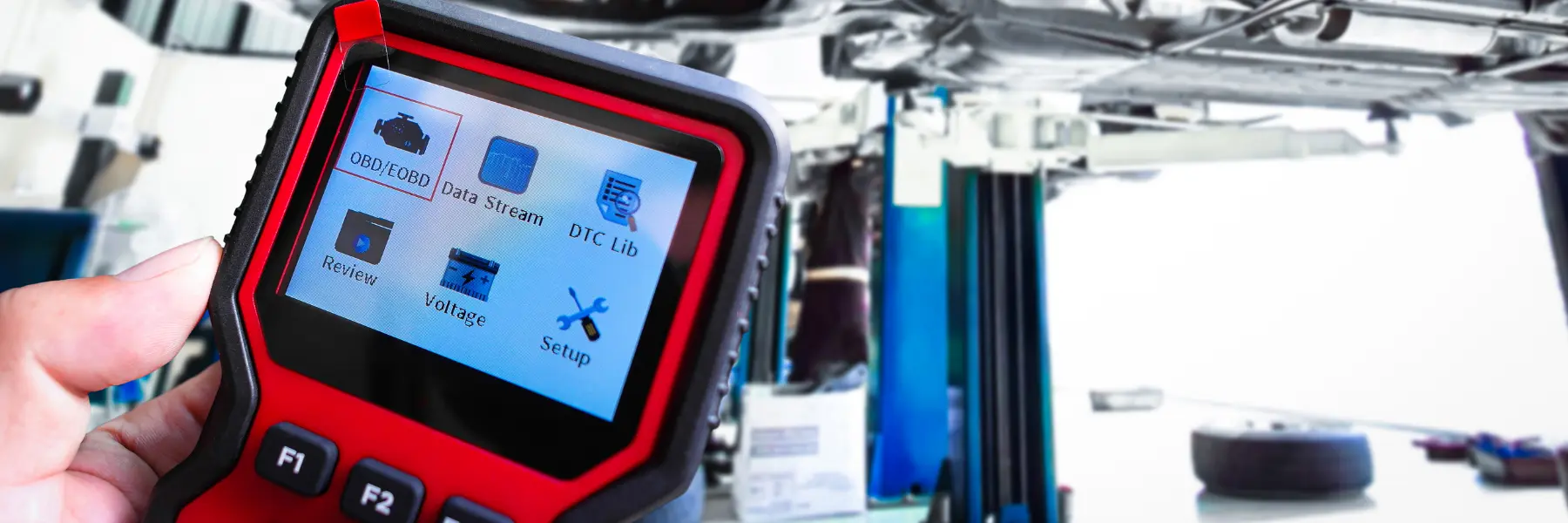
5. Battery Drain and Electrical Faults Karratha’s heat accelerates battery degradation. If your car is slow to start in the morning, especially after sitting in the sun all day, your battery may be on its way out. Electrical faults can also trigger multiple warning lights at once. A vehicle diagnostic scan reads the fault codes and pinpoints the exact issue quickly.
Drive or Tow? Practical Rules of Thumb
When in doubt, use this as your decision framework:
- Oil pressure light on: Do not drive a single metre. Call a tow.
- Temperature light on: Stop, cool down, check coolant level. If coolant is fine and it cools quickly, drive carefully and directly to a mechanic. If it overheats again immediately, tow it.
- Brake warning light on while moving: Pull over carefully and assess. If pedal feels normal and handbrake is off, drive slowly and directly to a brake specialist. If pedal feels soft or spongy, do not drive: tow.
- Grinding noise from wheels: Stop and inspect for a flat tyre or obvious brake damage. If everything looks intact, drive slowly and directly to a workshop. Any metal-on-metal grinding during braking means stop.
- Check engine light only, no other symptoms: Drive carefully to a mechanic for a same-day diagnostic scan.
- Smoke from the engine bay: Stop immediately. This is not a “drive carefully to the mechanic” situation.
What to Do When You’re Already in Trouble
If you’re already broken down or concerned about driving further:
- Call Route 1 directly: 08 5106 7668. We can advise over the phone whether your symptoms suggest it’s safe to drive in, or whether you should wait for a tow.
- Same-day assessment: For urgent issues, Route 1 prioritises same-day diagnostic scans so you’re not left waiting for days.
- Saturday by appointment: Karratha doesn’t stop on weekends, so we open on Saturdays by appointment. If you’ve got a problem that needs sorting before a Monday site start, call us to book in.
- Drop-in diagnostics: If your check engine light or any amber warning is showing, you can drop in for a scan without a pre-booked appointment for urgent cases.
Our engine repair and brake services pages outline what a full assessment involves for the most common urgent faults.
Book a Diagnostic Scan in Karratha
Don’t wait until a warning light becomes a breakdown. Route 1 Mechanical offers same-day diagnostic assessments for Karratha drivers with active warning lights or suspected faults.
Frequently Asked Questions
Is it safe to drive with the check engine light on in Karratha?
If the check engine light is amber with no other symptoms (no smoke, no loss of power, no unusual noise), you can drive carefully to a mechanic for a diagnostic scan. Do not ignore it or drive long distances without having it checked.
What should I do if my car overheats on a remote Karratha road?
Pull over immediately and switch off the engine. Do not open the radiator cap. Wait for the engine to cool, check the coolant level if safe to do so, and call a mechanic before attempting to continue driving. In Pilbara heat, continuing to drive an overheating vehicle causes rapid, severe engine damage.
Can Route 1 Mechanical do a same-day diagnostic scan for warning lights?
Yes. Route 1 Mechanical offers same-day assessments for urgent faults including active warning lights. Call 08 5106 7668 to discuss your symptoms and confirm availability before driving in.