
Search for a brake specialist in Karratha and you will find a page full of franchise chains and directory listings. What you will not find is anyone explaining what the word “specialist” actually means when it comes to brake work, or whether you genuinely need one for the job your vehicle requires.
That gap is worth filling, because the answer is more practical than most people expect. Some brake jobs really do call for specialist equipment and diagnostic knowledge. Most, however, are well within the capability of a properly equipped independent workshop, often completed faster, without the chain-store upsell, and without the dealer price tag. Knowing which is which can save you time, money and a lot of unnecessary worry.
What “brake specialist” really means
The phrase gets used loosely, so let us be specific. Every licensed mechanic in Australia is trained to work on braking systems. A brake pad swap or a fluid flush does not require a specialist any more than an oil change does.
Where the term genuinely earns its weight is in jobs that require dedicated diagnostic tools and deeper technical knowledge. These include:
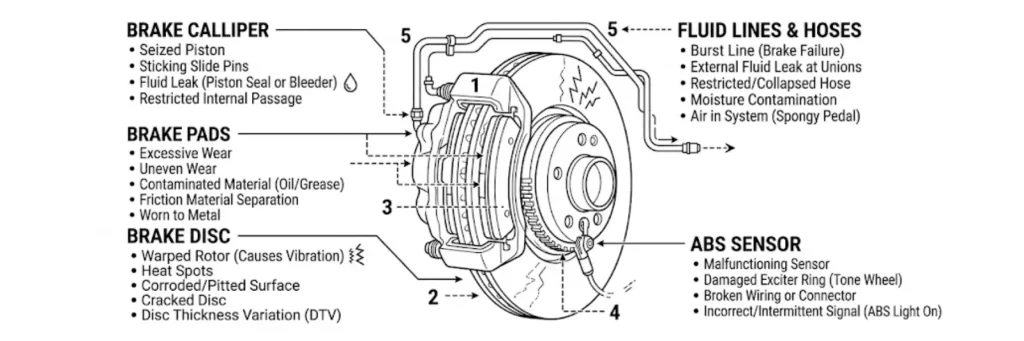
- ABS and traction control diagnostics. Modern anti-lock braking systems use wheel speed sensors, electronic control modules and hydraulic modulators. When an ABS or traction control warning light comes on, diagnosing the fault requires scan tools that can read manufacturer-specific brake codes and run active tests on the system.
- Hydraulic fault tracing. A spongy pedal or a slow loss of fluid can point to anything from a failing master cylinder to an internal calliper seal leak or a corroded brake line. Tracking down a hydraulic issue requires methodical testing and the experience to know where to look.
- Brake component machining. Resurfacing brake rotors to restore a true, smooth braking surface is a precision job. It requires a brake lathe and an understanding of minimum thickness specifications for each rotor type. Not every workshop carries this equipment.
- Electronic parking brake servicing. Many newer vehicles use an electronically actuated parking brake that requires a scan tool to retract the calliper pistons before pads can even be removed.
In short, “specialist” brake work is not about the brand name on the shopfront. It is about whether the workshop has the right equipment, the diagnostic capability and the trained technicians to handle the job properly.
When you do need specialist-level attention
Some brake symptoms should not be left to guesswork. If you notice any of the following, you want a workshop that can go beyond a visual inspection and actually diagnose what is happening inside the system:
- ABS or brake warning light on the dashboard. This is not a “wait and see” situation. The light means the system has logged a fault, and it may be operating in a reduced mode. A proper scan and diagnosis is the starting point.
- Brake pedal feels spongy or sinks to the floor. This usually points to air in the hydraulic lines, a failing master cylinder or an internal leak. It needs systematic hydraulic testing.
- Pulsation or vibration through the pedal or steering wheel when braking. This often indicates rotor runout or thickness variation. The rotors may need machining or replacement depending on their condition and remaining thickness.
- Vehicle pulls to one side under braking. This can be a stuck calliper, a collapsed brake hose or uneven pad wear, and sometimes it overlaps with suspension issues. Diagnosing it properly means checking both the braking system and the steering and suspension.
These are the jobs where equipment and experience make a real difference to the outcome.
When a well-equipped independent is the smarter choice
For the majority of brake work that vehicle owners actually need, a full-service independent workshop is not a compromise. It is a better fit.
Everyday brake jobs include:
- Brake pad and disc replacement
- Brake fluid flush and refill
- Calliper servicing or replacement
- Brake line inspections and repairs
- Handbrake adjustments
- Pre-trip brake checks (especially before long Pilbara highway runs)
These jobs do not require a branded franchise. They require clean parts, correct specifications and a mechanic who does the work properly. An independent workshop also tends to offer something the chains and dealers do not: a direct conversation with the person doing the work, and transparent advice about what actually needs replacing versus what can wait.
For Karratha drivers in particular, the dealer-versus-independent question is a real one. The nearest metro dealership is over 1,500 kilometres away. Waiting weeks for a dealer slot or paying premium labour rates for a straightforward pad and disc swap does not make practical sense when a local workshop can handle it on the same day.
Route 1 Mechanical offers comprehensive brake service and specialist work covering everything from pad and disc replacements through to ABS system diagnostics, hydraulic system servicing and emergency brake repairs. The workshop also handles the auto electrical services side, which matters when a brake fault ties into the vehicle’s electronic systems.
Questions to ask any workshop before brake work
Whether you go to a franchise, a dealer or an independent, these questions will help you work out if the workshop is the right fit for the job:
- Can you diagnose ABS and electronic brake faults, or just mechanical ones? A workshop that can only swap pads but cannot read brake system codes is limited in what it can solve.
- Can you machine rotors, or is replacement the only option? Machining is sometimes the more economical choice if the rotor still has enough material. It is worth asking before you agree to a full replacement.
- Will you show me the old parts? Any decent workshop should be happy to show you the worn pads, scored rotors or leaking lines they replaced. If they will not, ask why.
- Do you torque wheel nuts to spec after refitting? It is a basic step, but skipping it can cause disc warping and vibration. Worth asking.
- Is the quote itemised? You should be able to see parts and labour listed separately, with no vague lump sums.
Keeping up with regular logbook servicing is also one of the simplest ways to catch brake wear early. Brake inspections are part of every standard service, and catching a pad at 3 mm is a lot cheaper than waiting until it grinds into the rotor.
FAQS and Tips
Is a brake specialist different from a general mechanic?
In most cases, a brake specialist is a general mechanic with additional training or equipment for complex brake diagnostics and machining. The title itself is not regulated. What matters is whether the workshop has the tools and experience for the specific job your vehicle needs.
Can a general mechanic do ABS repairs?
Yes, provided they have the right diagnostic scan tools and training. ABS work involves reading electronic fault codes and testing sensors and modulators. A well-equipped independent workshop with modern diagnostic capability can handle this.
How do I know if my brakes need attention?
Common signs include squealing or grinding noises, a soft or spongy pedal, vibration when braking, the vehicle pulling to one side, or a brake warning light on the dashboard. If you notice any of these, book an inspection sooner rather than later.
How often should brakes be inspected?
At a minimum, brakes should be visually inspected at every scheduled service. If you drive in demanding conditions, such as regular gravel roads, heavy towing or stop-start mine site traffic, more frequent checks are a good idea.
Where can I get brake work done in Karratha?
Route 1 Mechanical is a locally owned workshop in the Karratha Industrial Estate offering comprehensive brake services, from everyday pad and disc replacements through to ABS diagnostics and hydraulic system repairs. Book a quote and get it sorted locally.