
You earned the European. The X5, the A6, the GLE. Maybe it was the performance, maybe the comfort on long drives between Karratha and Perth, maybe just because you could. Whatever the reason, you own a sophisticated piece of German (or Swedish, or Italian) engineering, and it deserves to be treated as one. If you have been wondering whether any local workshop can actually look after it properly, or whether you are supposed to drive it to Perth every time a warning light comes on, this guide is for you. Finding a qualified European car mechanic in Karratha is possible. Here is what you need to know before you book.
Why European Cars Cannot Be Serviced With a Generic Scan Tool
This is the big one, and it is worth understanding properly.
Every workshop has a basic OBD-II scanner. It reads common fault codes and works reasonably well on mainstream Japanese and Korean vehicles. But European manufacturers including BMW, Audi, Volkswagen, Mercedes-Benz, and Volvo, use proprietary diagnostic systems that go far beyond what a generic scan tool can see.
Without the right software, a mechanic might clear a warning light without ever identifying the actual fault behind it. For European vehicles, that gap matters:
- BMW uses ISTA (Integrated Service Technical Application), which handles everything from engine and transmission codes to chassis calibration and software programming.
- Audi and Volkswagen require ODIS (Off-board Diagnostic and Information System), which accesses not just fault codes but also guided fault-finding procedures specific to each vehicle variant.
- Mercedes-Benz uses XENTRY, which covers the full range of control units including the AIRMATIC suspension module, gearbox, and drive-by-wire systems.
A generic scanner cannot access most of these modules. It also cannot perform the coding and adaptation procedures required after replacing components. Fitting a new throttle body, gearbox mechatronic unit, or suspension strut on a European car without the correct software calibration often creates new faults, sometimes worse than the original one.
Before any European vehicle comes into the workshop, ask directly: what diagnostic platform do you use for this make? The answer tells you almost everything.
The Pilbara Is a Brutal Environment for a European Car

Karratha regularly reaches above 45 degrees Celsius in summer. The combination of extreme heat, red dust, corrugated unsealed roads to remote worksites, and long highway stretches puts specific stress on components that European engineers calibrated for milder European climates.
Here is where the Pilbara environment hits hardest on common European marques:
- Cooling systems: BMW’s cooling systems make extensive use of plastic components in the thermostat housing, expansion tank, and water pump. Repeated extreme heat cycles accelerate plastic brittleness and cause micro-cracks that develop into leaks. In Karratha’s summer, this process happens faster than it would in Sydney or even Perth.
- Rubber seals and hoses: Sustained high ambient temperatures degrade rubber compounds across all European makes. Turbo boost hoses, coolant pipes, and suspension bushings are particularly vulnerable and require inspection at tighter intervals in the Pilbara than the standard logbook schedule assumes.
- Transmission fluids: VW and Audi DSG (dual-clutch) transmissions are highly sensitive to heat. When DSG fluid degrades or overheats, the gearbox can enter limp mode, shift harshly, or lose responsiveness entirely. In the Pilbara, DSG fluid service intervals should be treated as a minimum, not a maximum.
- Mercedes AirMatic suspension: The AirMatic system uses rubber air struts, a compressor, and interconnected sensors. Fine red dust is a known accelerant for air strut seal wear and compressor contamination. Once a strut starts leaking, the compressor works harder to compensate, and eventually fails. Early inspection is always cheaper than a compressor replacement.
OEM Parts vs Aftermarket: Why It Matters More on a European Car
For a Toyota HiLux, a quality aftermarket filter or brake pad is usually a perfectly sensible choice. For a BMW, Audi, or Mercedes, the conversation is more nuanced.
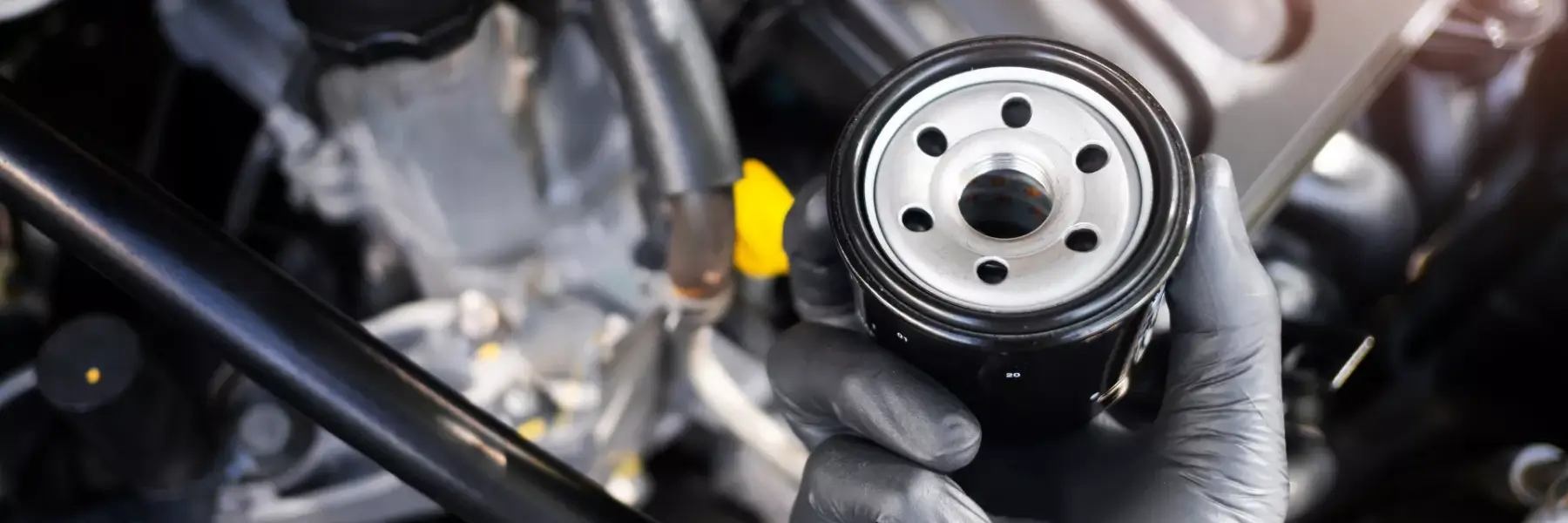
European manufacturers engineer extremely tight tolerances between components. A brake pad compound that is slightly too hard can cause disc scoring on a BMW M Sport braking system. An oil filter that does not meet VW 504/507 spec can void the extended service interval and, over time, affect engine condition.
Before any work begins on your European vehicle, ask your mechanic these questions:
- Are the parts OEM (Original Equipment Manufacturer) or OEM-equivalent? There is a difference between a genuine part and a branded aftermarket part that meets the same specification.
- Does the oil meet the exact manufacturer spec? BMW Longlife-04, MB 229.5, VW 504.00. These are not interchangeable. Using the wrong oil in a European engine is a genuine mistake with long-term consequences.
- Will this affect my warranty? Under Australian consumer law, an independent mechanic can service your vehicle without voiding the manufacturer warranty, provided the correct parts and specifications are used. A mechanic who uses the right materials and documents the work correctly protects your warranty just as well as a dealership.
For more on how Route 1 Mechanical approaches logbook servicing in Karratha while keeping your warranty intact, the team covers this in detail.
The Nearest Dealership Is 1,500km Away: What That Actually Means
The closest BMW, Audi, or Mercedes-Benz authorised dealership to Karratha is in Perth. That is roughly a 15-hour drive, or a flight plus a hire car, every time you need a service.
For residents of the Pilbara, that reality means one of three things:
- You drive the service interval beyond what is safe because the trip is impractical
- You use a local workshop that may not have the right equipment for your vehicle
- You find a qualified independent that is genuinely equipped to service European marques correctly
The third option is the right one, and under Australian consumer law, it is entirely legitimate. The Competition and Consumer Act protects your right to have your vehicle serviced by a qualified independent without losing your new car warranty, provided the service follows manufacturer specifications. BMW recorded 26,341 new vehicle registrations across Australia in 2024, leading the premium segment for the second consecutive year (Cairns Local News, January 2025). Demand for properly equipped independent European specialists is only growing alongside that ownership base.
Route 1 Mechanical carries manufacturer-grade diagnostic capability and services European vehicles to logbook specification. Whether your BMW needs a cooling system service or your Audi needs a transmission fluid change and software adaptation, the team has the tools to do it properly, without the Perth trip.
Make-Specific Issues to Watch for in the Pilbara Heat
Consider this a practical quick-reference for European owners in Karratha:
- BMW (all petrol series): Cooling system plastic components (expansion tank, thermostat housing, water pump impeller) are the most common failure point in sustained heat. Inspect at every service and replace proactively before leaks develop. Watch for the temperature gauge climbing slightly above the midpoint or a faint sweet smell near the engine bay.
- Volkswagen / Audi (DSG-equipped models): VW DSG transmissions are calibrated for European driving patterns. In the heat of the Pilbara, accelerated fluid degradation can cause harsh shifts, hesitation from rest, or unexpected limp mode. DSG fluid changes every 40,000km are strongly recommended in this climate, regardless of what the logbook says.
- Mercedes-Benz (AirMatic-equipped models): Dust intrusion into the suspension compressor intake and air strut seal wear are the two most common causes of AirMatic failure in regional WA. Symptoms start subtly (such as the car sitting slightly lower after parking overnight) and escalate quickly. Early diagnosis is always cheaper than compressor replacement.
- Volvo (all models): Electronic throttle body and sensor issues are more frequent in high-heat environments. Volvo’s diagnostic system requires VIDA software to properly read and reset these faults.
- All European marques: Cabin air filters and pollen filters clog significantly faster in the Pilbara’s dusty environment than in city driving. Replace at half the standard interval.
Book a European Car Specialist in Karratha
Route 1 Mechanical is Karratha’s equipped independent workshop for European vehicles. Manufacturer-grade diagnostics, correct specification fluids and parts, and a team that genuinely understands what these vehicles need in this climate, not just what a generic service schedule says.

Whether you drive a BMW, Audi, Mercedes-Benz, Volkswagen, or Volvo, the car service team at Route 1 Mechanical can look after it properly. No dealership trip required.
View the full range of services or get in touch with the team to book.
Frequently Asked Questions
Can an independent mechanic in Karratha service my BMW or Audi without voiding my warranty?
Yes. Under Australian consumer law, a qualified independent mechanic can service your European vehicle to manufacturer specifications using the correct parts and fluids, fully preserving your new car warranty. No dealership visit required.
Why does my European car need specialist diagnostic tools?
BMW, Audi, Mercedes, and Volkswagen use proprietary software systems that generic OBD-II scanners cannot fully access. Proper diagnosis, component coding, and adaptation require manufacturer-grade platforms like ISTA, ODIS, or XENTRY.
How does Karratha’s heat affect my European car more than a standard service schedule covers?European vehicles are calibrated for milder climates. In Karratha’s extreme heat, cooling system plastics, DSG transmission fluid, and Mercedes AirMatic seals degrade faster. Tighter inspection and fluid change intervals are strongly recommended in the Pilbara.