

If you have lived in Karratha for more than a season, you already know the sound. That rhythmic rattle over corrugations, the fine red dust that somehow finds its way into the glovebox, and the slightly unsettling wobble that creeps in a few months after you bought the car. Your suspension is talking to you, and it is worth listening.
Karratha’s roads are not like the roads most vehicles are engineered for. Between the Burrup, Dampier, Roebourne and the mining routes that stretch out from town, local drivers cover a mix of bitumen, gravel and heavily corrugated tracks almost daily. That combination puts a very particular kind of stress on 4WD suspension, and it is different from the wear a car might see in Perth or Sydney.
This article breaks down exactly what red dirt roads do to your suspension, the warning signs to watch for, and a servicing rhythm that actually suits Pilbara driving rather than a generic manufacturer schedule written for city conditions.
Why Red Dirt and Corrugations Wear Suspension Differently
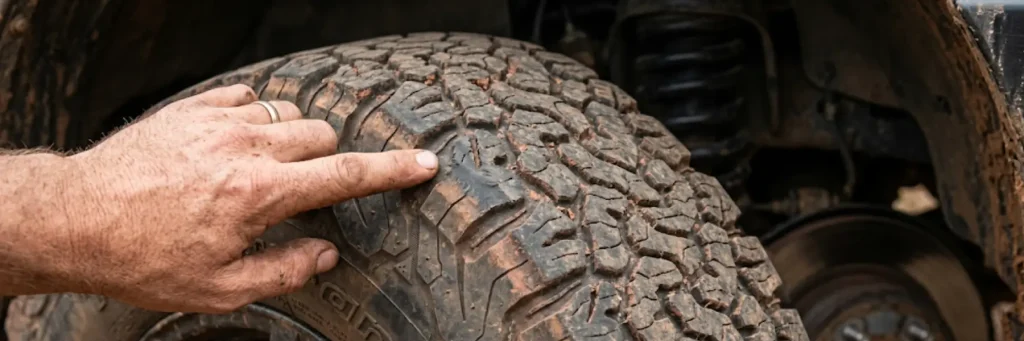
Potholes and speed bumps deliver the occasional hard jolt. Corrugated roads are a different animal entirely. They deliver thousands of small, rapid impacts in a row, and that repetitive high-frequency shaking is what really breaks down 4WD suspension components over time.
A few things compound the problem in and around Karratha specifically:
- Heat-cured rubber bushings. The Pilbara’s extreme heat accelerates the natural hardening of rubber suspension bushings. Once they lose flexibility, they transmit far more vibration straight into the chassis instead of absorbing it.
- Fine dust intrusion. Karratha’s iron-rich red dust is exceptionally fine. It works its way past seals on shock absorbers and ball joints, mixing with grease and grinding away at moving parts from the inside.
- Constant high-frequency shock loading. Unlike a single deep pothole, corrugations shake components tens of times per second. This fatigues coil springs, wears shock absorber bushings, and loosens fasteners that would otherwise stay put for years.
None of this happens overnight. It is a slow accumulation, which is exactly why so many drivers do not notice a problem until it has become an expensive one.
Wheel Alignment Takes a Hit Too
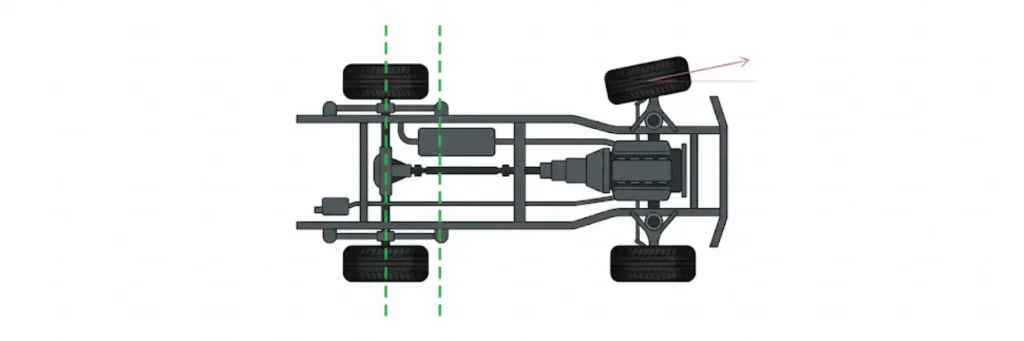
It is not just shocks and springs. Every time a wheel drops into a corrugation trough and slams back up, it pushes against the steering and alignment geometry. Over months of regular red dirt driving, that adds up to measurable changes in wheel alignment, even if you have never hit a single pothole or kerb.
A vehicle that is out of alignment will wear tyres unevenly, use more fuel, and become noticeably harder to control at highway speed. If your last wheel alignment was more than six months ago and you drive gravel regularly, it is worth having it checked alongside your suspension.
Warning Signs Your 4WD Suspension Needs Attention
Most suspension problems give you a heads up long before they become a breakdown. Keep an eye out for:
- Uneven or patchy tyre wear, particularly on the inner or outer edge of the tread
- Clunking or knocking noises over corrugations or speed bumps that were not there before
- The vehicle pulling to one side on a straight, flat road
- Sagging ride height, especially at the rear when the vehicle is loaded with gear or towing
If you are noticing two or more of these, it is a reasonable bet that your shock absorbers, bushings or springs have started to give up the fight against the red dirt.
A Servicing Interval That Actually Suits Pilbara Driving
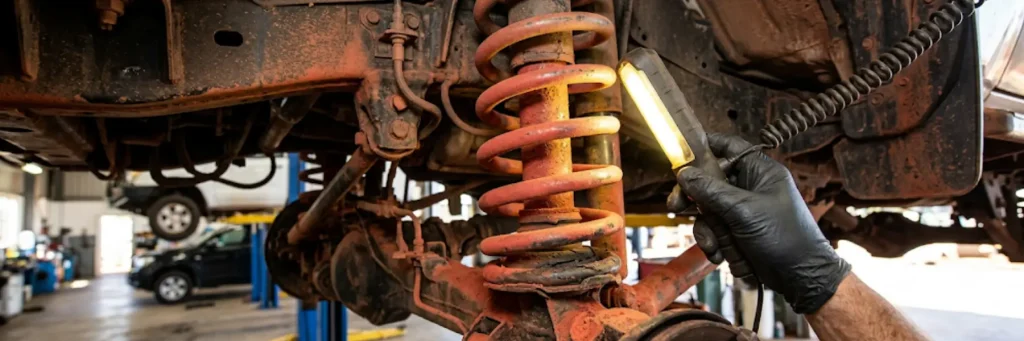
Manufacturer service schedules are written for average conditions, usually a mix of city and highway bitumen. They were not written with Karratha’s roads in mind. If you are regularly driving gravel, station tracks or corrugated routes out to the mines, it is worth having your suspension and 4WD suspension parts visually inspected more often than the standard interval suggests.
As a practical guide for Pilbara conditions:
- Have shock absorbers, bushings and steering components checked every 10,000 to 15,000 kilometres, rather than waiting for the standard 20,000 to 30,000 kilometre logbook mark
- Book a wheel alignment check every six months if you drive gravel or corrugated roads at least weekly
- After any long outback trip or a lap of Australia, get the whole suspension system looked over before you get back into regular local driving
This is not about servicing more for the sake of it. It is about catching a worn bushing or a weeping shock absorber before it turns into a failed component on the Great Northern Highway.
Book a Free Suspension Check with Route 1 Mechanical
You do not need to wait for a clunk, a pull, or a warning light to get your suspension looked at. If you drive Karratha’s red dirt roads regularly, whether that is a daily run out to site or the occasional weekend track, it is worth having a professional set of eyes on your shocks, bushings and alignment.
Route 1 Mechanical offers a free suspension check for Karratha drivers, alongside our full 4×4 servicing and car servicing options. Our team knows exactly what red dirt and corrugations do to a vehicle because we see it every week, and we will give you straight, honest advice rather than a sales pitch. If your brakes or alignment need a look while you are in, we handle that too, as part of our brake repairs and logbook servicing.
Book your free suspension check or give the team a call to talk through what you have been noticing on the road.
FAQs
How often should I check my 4WD suspension in Karratha? If you regularly drive gravel or corrugated roads, aim for a visual inspection every 10,000 to 15,000 kilometres rather than waiting for your standard logbook service.
What are the first signs of suspension damage from corrugated roads? Uneven tyre wear, clunking noises over bumps, the vehicle pulling to one side, and a sagging ride height are the most common early indicators.
Does red dirt actually damage suspension parts, or is it just dust? Yes. The fine dust works past seals on shocks and ball joints, mixing with lubricant and accelerating wear on moving parts well beyond what typical road dust causes.