
There is a particular sound a car makes when the brakes have had enough. Not the polite squeal, the other one, the low metallic scrape you feel through the pedal as much as hear. So you book it in, braced for a bill for brake pad replacement, and get a call at eleven saying the rotors need doing as well. The quote has quietly doubled, and the thought lands before you can stop it: is this fair?
Fair question, and it deserves a straight answer. Sometimes rotors can wait. Often they cannot, and doing the pads alone works out dearer once you look past the invoice in front of you. Better still, none of this is opinion. It comes down to a measurement any decent workshop will show you.
What brake pads do
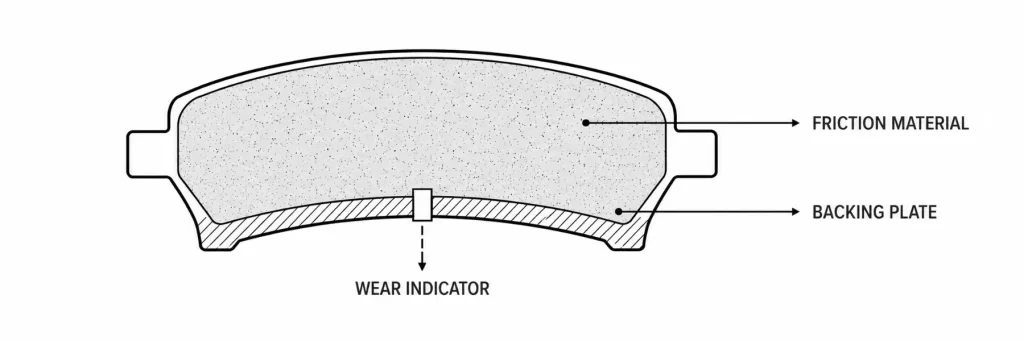
Brake pads are the consumable part of the system. They are blocks of friction material bonded to a steel backing plate, and they sit either side of the spinning disc.
Press the pedal and hydraulic pressure pushes the caliper pistons, which clamp the pads against the rotor. Friction converts your car’s momentum into heat. That is the whole job.
Because they are designed to wear away, pads have a finite life:
- New pads typically start with 10mm to 12mm of friction material
- 3mm is the widely accepted point to replace, and most wear sensors are set to warn around there
- Below 2mm you are close to metal on metal, and the damage stops being cheap
What changes the numbers:
- City versus highway. Stop-start traffic can wear a set out in 20,000 to 40,000km. Mostly open road driving can stretch the same set past 60,000km.
- Front versus rear. Fronts do the bulk of the braking and usually wear two to three times faster.
- Weight and towing. A loaded ute or a caravan behind you shortens pad life considerably.
- Driving style. Late, hard braking generates far more heat than easing off early.
- Pad grade. A quality ceramic or semi-metallic pad matched to the vehicle behaves very differently from the cheapest option on the shelf, particularly on heat and dust.
What brake rotors do
The rotor is the metal disc the pads squeeze. Two jobs: provide a consistent friction surface, and shed heat fast enough to stop the whole system fading.
That second job is the one people underestimate. Rotors wear thinner over time, and a thinner rotor holds less heat. Disc Brakes Australia notes that as a rotor approaches its minimum thickness, braking distance can increase by up to four metres (DBA technical bulletin, referencing Australian Standard AS 3617:1997). Four metres is the difference between stopping behind the car ahead and stopping inside it.
Rotors also develop surface problems long before they run out of thickness:
- Scoring and grooves from grit, or from pads run down to the backing plate
- Hot spots, hardened patches that no longer grip evenly
- Glazing, a polished sheen that reduces bite
- Runout or thickness variation, where the disc no longer runs perfectly true
Warning signs, part by part
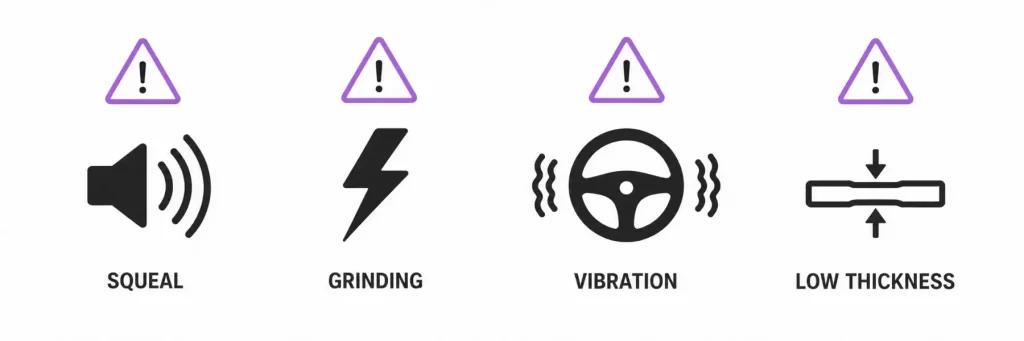
Pointing to the pads:
- A high pitched squeal at low speed, which is usually the wear indicator doing its job
- A harsh grinding or scraping noise, which means the pads are gone and the damage is already happening
- A dashboard brake wear light
- Visible pad material thinner than a 5 cent coin’s edge through the wheel spokes
Pointing to the rotors:
- Vibration through the steering wheel when braking from speed
- A pulsing or shuddering pedal
- Deep ridges you can catch a fingernail on
- A blue or rainbow tinge on the disc face, which indicates it has been overheated
Pointing to something else entirely:
- A soft or spongy pedal that sinks slowly, which suggests fluid or a hydraulic fault
- The car pulling to one side under braking, often a sticking caliper
That last group matters. Pads and rotors are the visible parts, but old brake fluid absorbs moisture and boils under heat, and a seized caliper slide will destroy a brand new set of pads on one side within weeks. A proper inspection covers all of it.
Why pads only can be a false economy
This is the part most quotes do not explain.
New pads are flat. A worn rotor is not. Bed a fresh set of pads onto a grooved, hardened surface and three things happen:
- The pads never make full contact. Only the high spots touch, so braking feels wooden and stopping distances stretch.
- The grooves machine themselves into the new pad. Within a few thousand kilometres the pad has worn to match the damage it was fitted against, and the extra concentrated load wears it out early.
- Uneven heat causes glazing. Hot spots on the rotor cook patches of the new pad hard and glassy, which is when the squeal and the shudder come back.
So you save money in March and pay for the whole job again in September, this time with rotors that are definitely past saving. The cheapest quote is rarely the cheapest outcome.
So do you need one, or both?
It comes down to measurement.
Pads only is fine when:
- The rotor measures comfortably above its stamped minimum thickness
- The surface is smooth and evenly worn, with no significant scoring
- There is no vibration or pedal pulsing
- The rotors are being cleaned up or lightly machined as part of the job
You need rotors too when:
- The measurement is at or below minimum, in which case replacement is mandatory, not a suggestion
- Machining would take the disc under minimum, which is the same answer
- There is deep scoring, cracking, or heat damage
- You have significant thickness variation causing pedal pulsing
A note on machining. Resurfacing on a brake lathe can be a sensible, economical fix on a rotor with plenty of material left. It cannot add metal back. Modern rotors are often thinner and lighter than older designs, which leaves less to work with, so on many vehicles replacement is simply the better value.
Get the honest answer, not the cheapest one
At Route 1 Mechanical, a brake inspection means the wheels come off, the pads get measured, and the rotors go under a micrometer. Then we tell you the number and what it means, so the decision is yours rather than ours.
We handle the full job in one visit: quality pads matched to your vehicle and how you use it, rotor machining or replacement, caliper servicing, brake fluid flushes, and hydraulic diagnosis when the pedal does not feel right.
- Book a brake repair and replacement service
- Have it checked as part of your next logbook service
- Or talk it through with your local mechanic on 08 5106 7668
FAQs
How do I know if I need brake pads, rotors, or both?
Squealing or grinding usually points to worn pads. A pulsing pedal or steering vibration under braking points to the rotors. In practice the two often arrive together, because worn pads damage rotors.
How long do brake pads typically last?
Roughly 20,000 to 40,000km in heavy city driving, and 60,000 to 80,000km with mostly highway use. Towing, load and driving style shift that a lot, so have them measured at every service.
Can I just replace brake pads and skip the rotors to save money?
Only if the rotors measure within specification and the surface is smooth. Fitting new pads to grooved or heat damaged rotors wears them out early and usually means paying for the job twice.
What is the minimum rotor thickness?
It is specific to your vehicle and stamped on the rotor itself, usually marked MIN TH followed by a figure in millimetres. A micrometer reading taken at several points gives the accurate comparison.