
A clutch starting to slip or a pedal going soft is stressful enough in the city. On the North West Coastal Highway between Karratha and Port Hedland, with no phone reception, no shade and 40-plus degrees outside, it becomes a genuine safety issue. Knowing the clutch slipping signs before they leave you stranded is the difference between a planned repair and an expensive emergency.
This guide covers what to do in that moment, how to tell what has actually failed, and the warning signs most drivers miss in the weeks beforehand.
What a failing clutch actually feels like
The pedal will do one of three things, and each tells you something different:
- Drops to the floor and stays there: this usually means hydraulic failure. The master cylinder or slave cylinder has lost fluid or failed internally. The clutch itself may still be fine.
- Feels spongy or soft: there is likely air in the hydraulic line or the cylinder seals are leaking. You might still be able to select gears, but it will get worse.
- Engages only at the very top of the pedal travel: the clutch disc is worn thin. This is the classic sign your clutch is going and will eventually slip under load.
Each of these needs a different response. A hydraulic issue can sometimes be a relatively affordable fix. A worn clutch disc means a full clutch replacement.
Quick roadside check you can do yourself
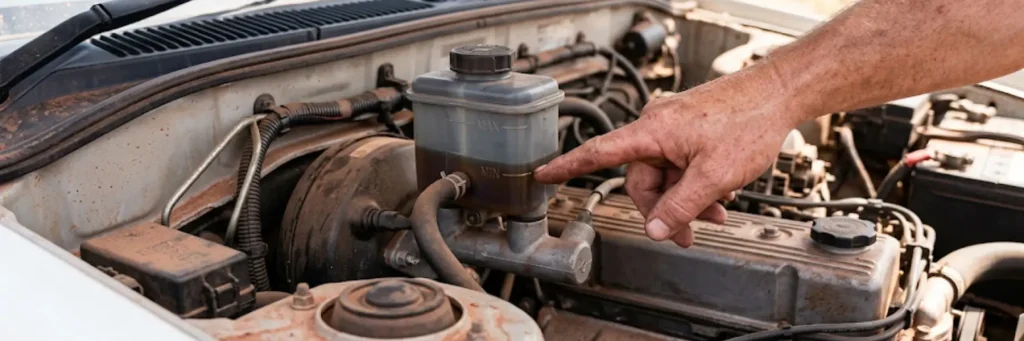
If you are pulled over and trying to work out what has happened, pop the bonnet and look at the clutch fluid reservoir. On most vehicles it sits near the brake master cylinder on the driver’s side firewall.
- Reservoir empty or very low: hydraulic failure. Fluid has leaked out somewhere, usually the slave cylinder. This is often cheaper to fix than a full clutch replacement.
- Reservoir full but pedal still soft: internal seal failure in the master cylinder, or air in the line. The fluid is there but is not building pressure.
- Reservoir fine, pedal works but clutch slips: the clutch disc is worn. No quick roadside fix for this one.
This five-second check under the bonnet can save you a lot of confusion and help you explain the problem clearly when you call for help. It is also useful information for the team when you bring the vehicle into a workshop for brake or hydraulic system inspection, since many vehicles share fluid between the clutch and brake systems.
The clutch slip self-test
If the pedal feels normal but you suspect the clutch is slipping, there is a simple test you can do on a flat, quiet road:
- Select fourth gear at low speed (around 30-40 km/h)
- Press the accelerator firmly but steadily
- Watch the tachometer
If the engine revs climb but the vehicle does not accelerate to match, the clutch is slipping. The disc cannot grip the flywheel under load anymore. This means a full clutch replacement is coming, and it is better to book it in now rather than wait until the clutch gives out completely on a remote stretch of highway.
Can you actually drive with a bad clutch?
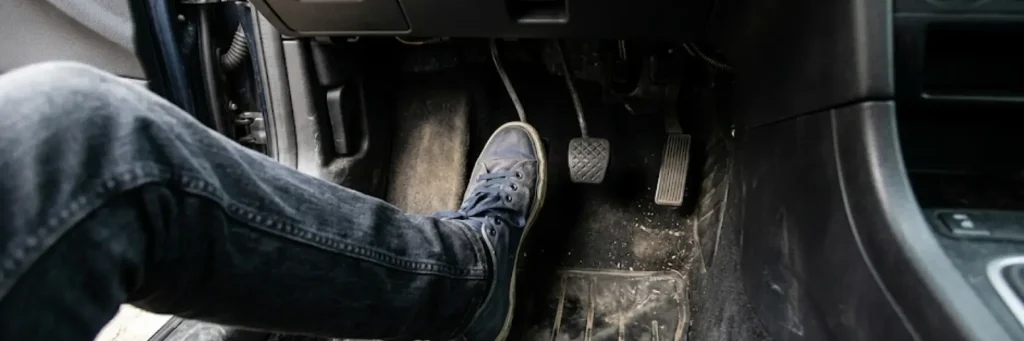
This is one of the most common questions we get at Route 1 Mechanical, and the answer depends entirely on what has failed.
- Clutch is slipping but still engaging: you may be able to drive a short distance at low revs. Avoid hills and heavy acceleration. Do not tow anything.
- Pedal is on the floor with no resistance: you cannot safely select gears. Call a tow truck.
- You are on a remote highway in 40-degree heat: even if you think you can limp along, call a tow. A full clutch failure at highway speed is dangerous, and being stranded between towns in the Pilbara is a serious safety risk.
Driving on a slipping clutch also generates extreme heat in the bell housing, which can damage the flywheel, pressure plate and even the rear main seal. What starts as a $1,000 clutch job can quickly become a $2,500-plus repair if the flywheel needs machining or replacement. In Australia, a full clutch replacement typically costs between $800 and $2,500 depending on the vehicle (Yellow Pages Australia, 2026).
What to do if you are stranded on a remote highway
If the clutch has failed completely and you cannot drive, follow these steps:
- Turn on your hazard lights immediately
- Move the vehicle off the road as far as safely possible
- Note your GPS coordinates or the nearest kilometre marker
- Call for a tow. If you have no reception, wait with the vehicle rather than walking
- Stay in the shade, conserve your phone battery, and keep water nearby
- Do not leave your vehicle unattended on the roadside
Towing in remote WA is distance-based. A flatbed tow from somewhere between Karratha and Port Hedland (roughly 240 km apart) can cost several hundred dollars or more depending on the distance and whether it is after hours. According to the RAC WA, an additional $4.75 per kilometre applies after the first 50 km, with a $149 after-hours surcharge on weekends, public holidays and between 5 pm and 8 am (RAC WA, 2025). There is no Uber or taxi to fall back on out here. Roadside assistance membership is worth its weight in gold in the Pilbara.
Five warning signs most drivers ignore for months
Most clutch failures do not happen overnight. Here are the signs that show up weeks or months before the clutch actually gives out:
- Slipping in high gears under load: the clutch holds fine in first and second but slips in fourth or fifth when you accelerate. This is often the first sign your clutch is going.
- Burning smell after hills or towing: a hot, acrid smell from under the vehicle after climbing a grade or pulling a caravan. That is friction material overheating.
- Bite point creeping higher: you need to let the pedal out further and further before the clutch grabs. The disc is getting thinner.
- Judder or vibration on takeoff: the vehicle shakes when you pull away from a stop. Could be a warped flywheel or contaminated clutch disc.
- Grinding or difficulty getting into reverse: this can indicate a dragging clutch, where the disc is not fully disengaging even with the pedal pressed.
If any of these sound familiar, it is worth getting the clutch inspected sooner rather than later. A regular logbook service will pick up early clutch wear and hydraulic leaks before they turn into roadside emergencies.
Hydraulic failure explained
The clutch hydraulic system is simpler than most people think. It has three main parts:
- Master cylinder: bolted to the firewall behind the clutch pedal. When you press the pedal, it pushes fluid through a line to the slave cylinder.
- Slave cylinder: mounted on the gearbox bell housing. It receives the hydraulic pressure and pushes the clutch release fork or bearing.
- Clutch fluid: in most vehicles this is the same DOT 3 or DOT 4 brake fluid that your braking system uses.
When a seal fails in either cylinder, fluid leaks out or air gets in, and the pedal goes soft or drops to the floor. The good news is that a master or slave cylinder replacement is significantly cheaper than a full clutch replacement and can often be done without removing the gearbox.
Book a clutch inspection before your next long drive
If you are planning a trip along the North West Coastal Highway, or if you have noticed any of the warning signs above, get your clutch checked before you leave Karratha. At Route 1 Mechanical, we inspect clutch operation, hydraulic fluid levels, pedal feel and free play, and check for stored fault codes on vehicles with electronic clutch sensors.
A 30-minute inspection now can save you a breakdown, a tow bill, and hours waiting in the Pilbara heat. Book online or call us on 08 5106 7668.
Frequently Asked Questions
Can I drive home with no clutch pedal?
If the pedal is on the floor with no resistance, you cannot safely change gears. Call a tow truck rather than risking further damage to the gearbox or getting stranded.
What is the difference between a clutch hydraulic failure and a worn clutch disc?
Hydraulic failure means the system that operates the clutch has lost fluid or pressure. A worn disc means the friction material is spent. Check your fluid reservoir under the bonnet to tell them apart.
How much does a clutch replacement cost in Karratha?
Expect to pay between $1,000 and $2,500 depending on the vehicle. 4WDs and diesel utes tend to sit at the higher end due to heavier components and longer labour times.
Does towing a caravan wear out a clutch faster?
Yes. The extra weight puts significantly more load on the clutch disc, especially during takeoff, hill climbs and low-speed manoeuvring. If you tow regularly, get your clutch inspected more often.
Can a mobile mechanic fix a clutch on-site?
A hydraulic cylinder replacement can sometimes be done on-site. A full clutch replacement requires removing the gearbox and is a workshop job. Our team at Route 1 can advise on whether a mobile repair is feasible for your situation.
Price disclaimer: the prices in this article are rough estimates only and are subject to change after we inspect your vehicle. For an accurate quote, call Route 1 Mechanical on 08 5106 7668.