

Everyone who works FIFO out of Karratha has a version of the same story. Someone they know, halfway to nowhere, standing in the shade of their own ute waiting on a mate to drive out with a spare. No phone reception. No shade worth the name. Nothing to do but watch the heat shimmer off the bitumen and think about how avoidable it all was.
That is the thing about tyres out here. They almost never fail without warning. They fail after weeks of quietly telling you something was wrong, and the driver just did not have a reason to look. A sidewall that had been weeping for a fortnight. A spare that has not held pressure since 2023. Front tyres worn to nothing on the inside edge because an alignment went out on a corrugated access track and nobody noticed.
Ten minutes in a carpark catches nearly all of it. Here is the check our team runs on FIFO utes every week, and where good tyre repair in Karratha fits into it.
Why Karratha chews through tyres faster
The Pilbara is genuinely one of the harshest tyre environments in the country. Roebourne, barely 40 kilometres up the road, recorded 50.5°C on 13 January 2022, one of the hottest temperatures ever measured in Australia (Bureau of Meteorology / national extremes record). Road surface temperatures sit far above that.
What that heat and terrain do to your rubber:
- Heat expansion. Air pressure climbs roughly 1 PSI for every 5°C rise. A tyre set at 38 PSI on a cool morning can be sitting well over 45 PSI by midday, and an already weak carcass is far more likely to let go.
- Corrugations. Unsealed access tracks hammer the tread blocks and the suspension holding them straight. Uneven wear shows up fast.
- Sharp gravel and blue metal. Sidewalls take cuts that never seal properly.
- Load. Toolboxes, canopies, a full long range tank, a trailer. Most FIFO utes run near their load limit most of the time.
- Red dirt and UV. Rubber dries out and crazes, especially on a vehicle parked in the sun for a fortnight while you are on swing.
The compounding factor is that the vehicle sits idle for two weeks, then does 400 kilometres in a day. Tyres do not like that pattern.
The 5 point FIFO tyre check
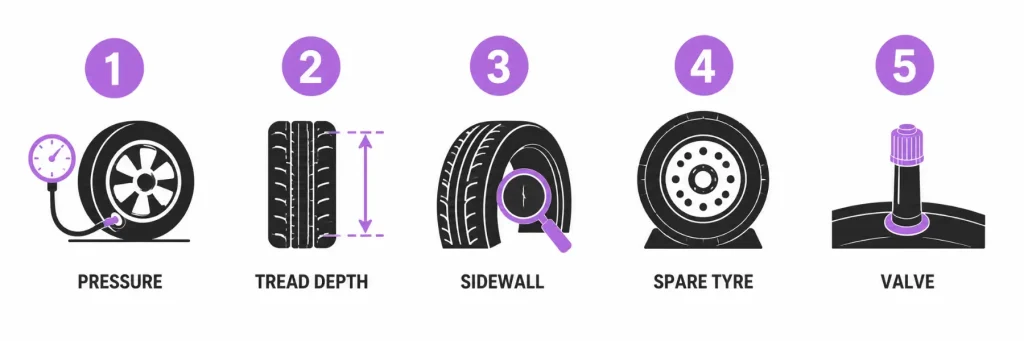
1. Tread depth
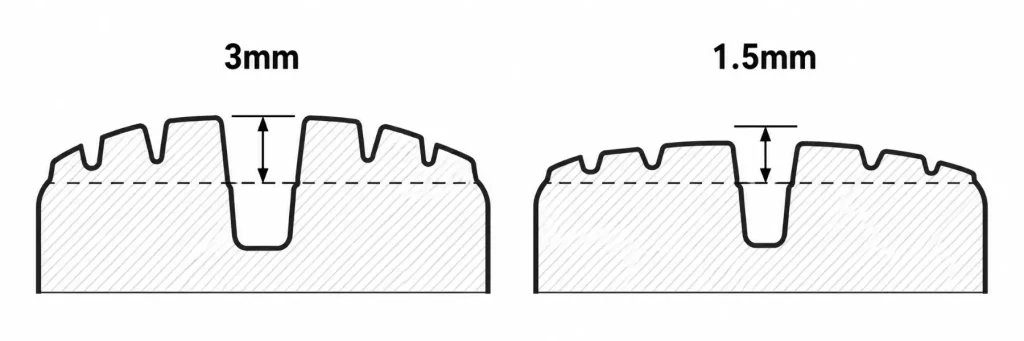
Get a $5 gauge from the counter, or use a 20 cent coin. If the tread does not reach the bill of the platypus, you are close to the limit. WA requires a minimum of 1.5mm of tread depth (Department of Transport WA). That is the legal floor for a sealed road, not a sensible number for corrugated gravel. Under 3mm and you have lost meaningful braking and water clearing performance, which matters more than you would think in a Pilbara downpour.
2. Pressure, including the spare
Check cold, first thing in the morning, before you have driven anywhere. Warm tyres read high and will fool you. Compare against the placard on the driver’s door pillar, not what someone told you at the pub. More than 10% off spec, either way, and it needs correcting. Then check the spare. We pull spares out from under trays every week that have been sitting at 12 PSI since the vehicle was new. A flat spare is the same as no spare.
3. Sidewall cracks and bulges
Run your hand around both sidewalls, inner and outer. You are feeling for a bulge, which means the internal cords have broken and the tyre is holding pressure with rubber alone. That tyre is finished. Also look for fine spidery cracking near the bead, which is UV and heat ageing. Check the four digit date code on the sidewall too. Anything over five or six years old in this climate is living on borrowed time regardless of tread.
4. Valve stems
The cheapest part on the car and the one most likely to strand you. Rubber stems perish in heat and go brittle. Flick each one sideways with a finger. If it feels stiff, cracked at the base, or the cap is missing and packed with red dust, get them replaced when the tyres come off. It is a few dollars per wheel.
5. Alignment and wear pattern
Feathering across the tread, a bald inner edge, or a steering wheel that sits off centre on a straight road all point to alignment. So does a vehicle pulling left on the flat. Corrugations and kerb strikes knock toe settings out constantly up here, and a bad alignment can scrub a new set of tyres in a fraction of their life. If you have had a lift kit or larger tyres fitted, alignment is not optional.
When to get it seen before you go
Come in, do not chance it, if any of the following apply:
- Tread anywhere under 3mm
- Any visible bulge, cut, or crack in the sidewall
- Pressure more than 10% off the placard, or one tyre dropping faster than the others
- A slow leak you have been topping up
- Tyres older than six years, whatever the tread looks like
- Vibration through the wheel above 80 km/h, which is usually balance or a shifted belt
While you are in, it is worth pairing the tyre work with a brake inspection before a long drive and, if your service is due anyway, a full pre-trip vehicle service so it is all done in one visit rather than two.
What we can sort in one visit
Route 1 Mechanical is set up for exactly this. We are on Coolawanyah Road in the Karratha Industrial Estate, and we keep the work practical:
- Puncture repairs, usually 20 to 30 minutes
- New tyres from trusted brands, fitted and balanced, with 4WD fitments for HiLux, Ranger, Prado and D-Max
- Wheel alignment, including after a lift
- Suspension repairs, shocks and 4WD lift kits
- Brakes, cooling system checks and batteries, which are the other three things Pilbara heat kills
- Trailer and caravan safety checks, wheel bearings included
If you are heading to Dampier or further afield, book in the day before your rotation starts. We know the FIFO calendar and we will work around it.
Book a tyre check with your Karratha mechanic on 08 5106 7668.
Plenty of workshops can put a tyre on a rim. Fewer understand that you fly out Tuesday, the vehicle sits for two weeks, and the last thing you need is a job that runs over. That is the routine we work to. Call in, we will tell you straight whether it will get you there and back.
FAQs
How often should FIFO workers check their tyre pressure in Karratha?
At minimum before every long drive, and ideally fortnightly. Take the reading on a cold morning before you have driven anywhere, because in 40°C plus heat a warm tyre will read several PSI high and hide an underinflation problem.
Can I drive on a slow puncture from Karratha to Dampier?
No. A slow leak that is stable in cool conditions can deteriorate very quickly under Pilbara heat and load, and a deflating tyre at highway speed is how blowouts happen. Come in first, most repairs take 20 to 30 minutes.
What tyre tread depth is legally required in WA?
The legal minimum is 1.5mm across the tread. For unsealed and outback driving we would not send a vehicle out under 3mm, because braking and wet weather grip fall away sharply below that point.
Does Route 1 Mechanical stock 4WD tyres for popular FIFO vehicles?
Yes. We carry and fit tyres for common FIFO utes and wagons including HiLux, Prado, Ranger and D-Max. Ring ahead with your size and we will confirm stock or get it in quickly.