

Ask anyone in Karratha what they drive and the answer is almost always a diesel ute. It is practically the default vehicle of the Pilbara. But is diesel actually the right choice for the way most people here drive day to day? The diesel vs petrol question looks completely different when you factor in 45-degree summers, red dust that gets into everything, a town you can cross in ten minutes, and a long, punishing run to Dampier, Roebourne, or Tom Price sitting on the other side of it. The national debate misses all of this. Let us break it down properly for where you actually live.
What Makes Pilbara Driving Different
Before comparing fuel types, it helps to understand what the driving environment here actually involves, because it is genuinely unlike most of Australia.
- Karratha is a compact town. Most errands, school runs, and commutes are short. A lot of residents barely leave the sealed road network on a daily basis
- Temperatures regularly exceed 45 degrees Celsius in summer, placing significant strain on cooling systems, engine oil, and rubber components regardless of fuel type
- Red dust is relentless. It gets into air filters, seals, and engine bays far faster than in city environments, pushing maintenance needs beyond what the manufacturer’s schedule assumes
- Longer runs out to Dampier (around 20 kilometres), Roebourne (around 40 kilometres), and Tom Price (around 150 kilometres) involve sustained highway speeds across open, largely unsealed-adjacent terrain
- The wet season brings flooded or impassable roads. According to Main Roads Western Australia, road conditions across the Pilbara can change rapidly during the wet, making four-wheel drive capability and vehicle reliability genuinely critical
These factors shape which engine type serves Karratha drivers best, and the answer is not the same for everyone.
The Diesel Case: Where It Wins in the Pilbara
For the right use case, diesel is still a strong choice here. Here is where it earns its place:
- Long highway runs. Diesel produces more torque at lower revs and uses less fuel per kilometre on open roads. If you are regularly running out to Tom Price or beyond, the fuel economy advantage is real
- Towing and carrying. Mining work, caravans, trailers, boats — diesel handles load far better than petrol. The pulling power is simply in a different class
- Long-term durability. A well-maintained diesel engine can outlast a petrol equivalent in heavy-use applications, which matters when the nearest major city is 1,500 kilometres away
- Fuel availability. Diesel is widely available across the Pilbara, including at roadhouses and remote stations, which matters for anyone heading off the main network
That said, diesel has a significant weakness in the Pilbara that many owners do not find out about until it is too late.
The DPF Problem Nobody Warns You About
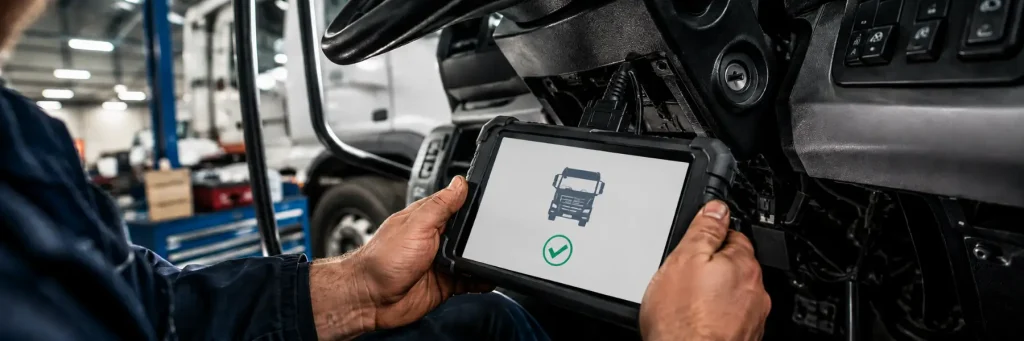
Modern diesel vehicles are fitted with a diesel particulate filter, or DPF. Its job is to capture soot from the exhaust and burn it off during what is known as regeneration. The catch is that regeneration requires sustained highway driving at operating temperature to work properly.
Short trips do not give the DPF a chance to regenerate. Karratha’s compact layout means a lot of diesel ute owners spend most of their week doing exactly the kind of driving that prevents regeneration from happening: school drop-off, a run to the shops, a short commute to the industrial estate. Over time, the filter clogs. When it does, you are looking at warning lights, reduced power, and in serious cases a full DPF replacement that can run into thousands of dollars.
If your diesel spends most of its time doing town errands with the occasional highway run, this is a genuine risk worth knowing about. Regular servicing that includes a DPF health check, combined with making a point to take longer runs when you can, goes a long way toward preventing the problem from developing. Route 1 Mechanical’s diesel mechanic services in Karratha include DPF diagnostics and cleaning, which is worth booking if your diesel has been doing predominantly short-trip work.
The Petrol Case: Where It Makes Sense
Petrol does not get enough credit in regional Western Australia, partly because the ute culture here defaults to diesel by habit. But for some Karratha drivers, petrol is genuinely the better choice.
- Fuel cost right now. As of mid-2026, diesel is averaging around $2.27 per litre compared to petrol at roughly $1.87 per litre across much of Australia, according to fuel price tracking by elitemotors.com.au (June 2026). That gap adds up quickly if you are filling a large tank every week
- Lower servicing complexity. Petrol engines do not have DPFs, EGR valves, or the additional systems that come with modern diesel. For drivers who just want reliable, low-fuss transport around town, petrol simplifies the maintenance picture
- Short-trip suitability. If your driving is mostly around Karratha itself, petrol handles short, stop-start trips without the risk of filter-related problems
- Lower purchase price. Petrol variants of equivalent models are usually cheaper upfront, which matters if you are buying a second or third vehicle for the household
Pilbara Heat and Dust: What Both Engines Need
Regardless of which fuel type you choose, the Pilbara environment pushes both types harder than the manufacturer’s service schedule was designed for.
A few things that matter more here than in most of Australia:
- Air filter replacement. Red dust loads filters significantly faster than urban or coastal environments. Check your air filter at every service, not just at the manufacturer’s recommended kilometre interval
- Coolant system condition. Overheating is the Pilbara’s most common and most expensive engine problem. A cooling system flush and pressure test before summer is not optional here; it is basic risk management. Route 1 Mechanical’s cooling system services are designed specifically around what this environment demands
- Oil viscosity and change intervals. Higher ambient temperatures accelerate oil degradation. Using the correct viscosity grade for the climate and shortening your oil change interval below the standard recommendation is a straightforward way to extend engine life significantly
- Rubber seals and hoses. The combination of UV exposure and extreme heat degrades rubber components much faster than in temperate climates. Have hoses and belts inspected regularly, not just when something visibly fails
Which Should You Choose?
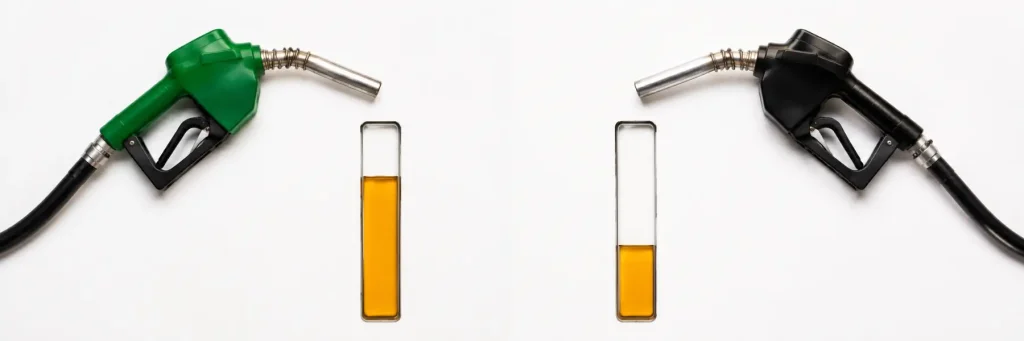
There is no universal answer, but here is a practical guide based on how most Karratha drivers actually use their vehicles:
Choose diesel if you regularly tow, carry loads, do frequent highway runs to surrounding towns or remote areas, or your work demands genuine off-road capability with heavy payload.
Choose petrol if your driving is mostly around town, you do short daily trips without regular long runs to clear the DPF, and you want lower fuel costs and simpler servicing in the current pricing environment.
Whichever you drive, the Pilbara’s heat and dust make regular servicing more important here than almost anywhere else in Australia. The standard service interval is built around average Australian conditions. Karratha is not average conditions.
If you are unsure how your vehicle is holding up, or you want an honest assessment of whether your diesel’s DPF is in good shape, bring it in to Route 1 Mechanical. Book a car service in Karratha and we will give you a straight answer, not a list of upsells.
Frequently Asked Questions
Is diesel or petrol better for the Pilbara?
It depends on how you drive. Diesel suits long highway runs, towing, and heavy loads. Petrol suits short town trips and drivers wanting lower fuel costs and simpler maintenance. Most Pilbara drivers benefit from understanding which use case actually applies to them.
What causes DPF problems in town driving?
Diesel particulate filters need sustained highway speeds to regenerate properly. Short urban trips prevent regeneration, causing soot to build up over time. Left unchecked, a blocked DPF causes power loss, warning lights, and potentially costly replacement.
How often should I service my car in the Pilbara heat?
More frequently than the standard manufacturer schedule suggests. Red dust clogs air filters faster, extreme heat degrades oil quicker, and UV exposure attacks rubber seals and hoses. Ask your mechanic to set an interval suited to Pilbara conditions, not average Australian ones.
Can I drive a petrol car on Pilbara unsealed roads?
Yes, though your vehicle’s ground clearance and four-wheel drive capability matter more than fuel type for unsealed surfaces. Any vehicle heading off sealed roads in the Pilbara should be in good mechanical condition with tyres, brakes, and cooling systems checked before departure.